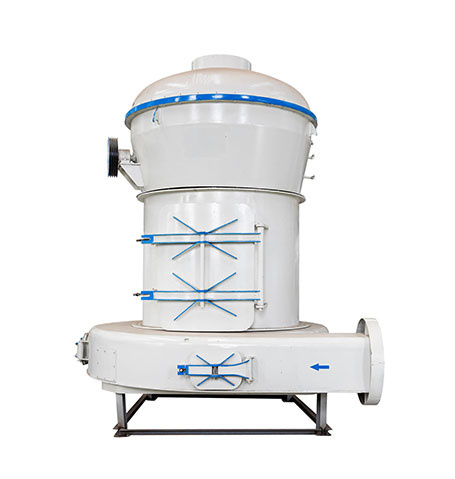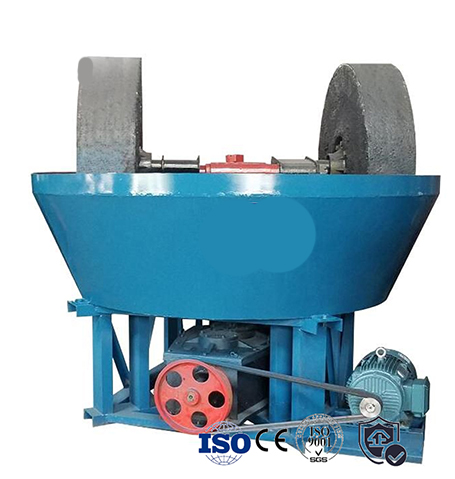
Gold Grinding Mill for Sale | Wet Pan Mill | STM
STM’s Gold Grinding Mill (Wet Pan Mill) is designed for wet grinding of suitable gold ore, silver ore and other compatible mineral materials. By combining rotating grinding rollers with a circular grinding pan, a wet pan mill reduces material size and produces ground material for subsequent mineral processing.
Henan Centbro Machinery (STM) Equipment Co., Ltd. offers mining and grinding equipment for different project requirements. The appropriate machine should be selected according to ore characteristics, feed size, required capacity and the intended downstream process.
Gold Grinding Mill | Wet Pan Mill | Gold Ore Grinding Mill | Gold Mining Equipment
What Is a Gold Grinding Mill (Wet Pan Mill)?
A Gold Grinding Mill, also known as a Wet Pan Mill in this equipment category, is a grinding machine that uses heavy rollers moving over a circular pan to crush and grind suitable mineral materials. Water can be added to the grinding process to produce a slurry, depending on the selected configuration and process requirements.
Wet pan mills are used in certain small- and medium-scale mineral-processing operations, including projects involving suitable gold-bearing and silver-bearing ores. Their suitability depends on the ore’s hardness, mineral composition, feed size and the required processing capacity.
It is important to distinguish grinding from mineral recovery. A wet pan mill reduces particle size; additional separation or recovery equipment is generally required to process the ground material and obtain a mineral concentrate or other desired product.
Key Features of a Wet Pan Mill
1. Wet Grinding for Suitable Mineral Materials
A wet pan mill can grind compatible mineral materials with water added to the process. The resulting slurry can be directed to an appropriate downstream processing stage.
Before purchasing, confirm that the machine is suitable for your ore type, hardness, feed size and target grinding requirements.
2. Roller-and-Pan Grinding Structure
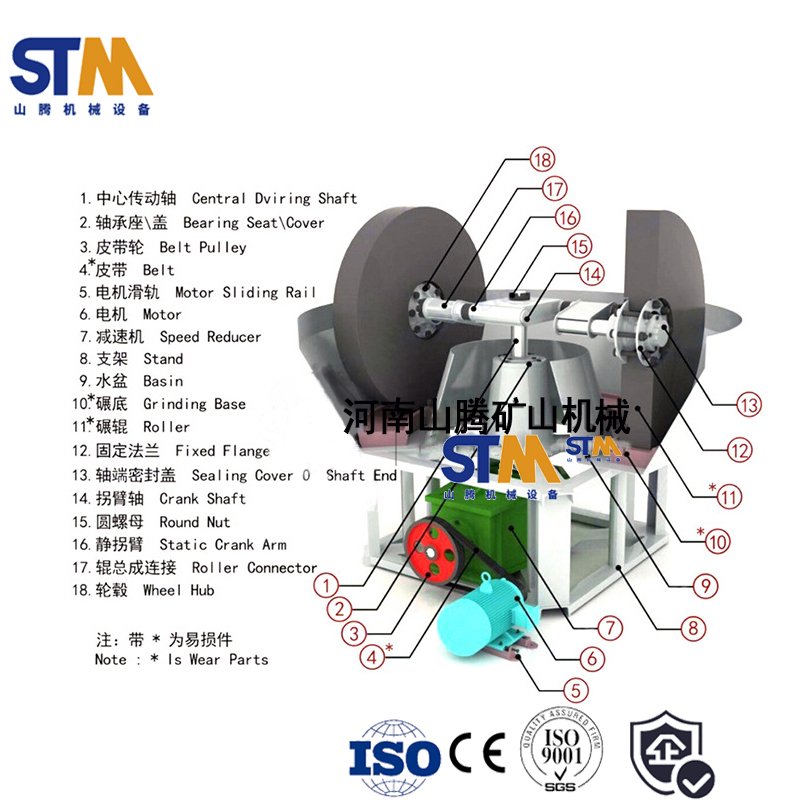
The machine uses grinding rollers that move over a circular grinding pan. The combined rolling, compression and friction action helps reduce the size of the feed material.
The actual grinding performance depends on the machine design, operating conditions and characteristics of the material being processed.
3. Suitable for Selected Gold and Silver Ore Projects
Wet pan mills may be considered for certain gold- and silver-ore grinding applications. However, not every ore deposit is suitable for this type of equipment.
A technical assessment should consider ore hardness, mineral distribution, target particle size and the downstream recovery method before a model is selected.
4. Integration with Mineral Processing Equipment
A wet pan mill can form part of a broader mineral-processing system. Depending on the project, supporting equipment may include feeders, crushers, pumps, screens and suitable separation equipment.
The complete process should be designed around the ore characteristics and the required final product rather than selecting a grinding machine in isolation.
Wet Pan Mill Working Principle
A typical wet-grinding process involves the following stages. The exact operating procedure depends on the selected machine and plant configuration.
Step 1: Prepare the Feed Material
Ore is prepared to a suitable feed size, using crushing equipment when necessary. The maximum permitted feed size must be confirmed for the selected wet pan mill.
Step 2: Feed the Material
Prepared material is introduced into the grinding pan according to the equipment’s operating requirements. Water may be added when required by the process.
Step 3: Grind the Material
The rollers move over the pan, applying grinding action to reduce the material size. Grinding time, feed rate and water addition can affect the resulting material characteristics.
Step 4: Discharge the Ground Material
Ground material is discharged according to the machine’s design. In a wet process, the output may be handled as a slurry.
Step 5: Continue to the Appropriate Processing Stage
The ground material is sent to a suitable downstream process based on the ore and recovery requirements. Additional classification, concentration or other processing steps may be needed.
Applications of Gold Grinding Mills
Gold Ore Grinding
A wet pan mill may be considered for suitable gold-bearing ores where its grinding characteristics and capacity match the project requirements. The appropriate grinding fineness depends on the ore and the selected recovery process.
Silver Ore Grinding
Certain silver-bearing ores may also be suitable for wet grinding. A material assessment is recommended to confirm equipment compatibility and the required processing conditions.
Small- and Medium-Scale Mineral Processing
Wet pan mills are used in some mineral-processing operations where the equipment’s capacity, process arrangement and operating requirements fit the project. Buyers should compare the expected throughput and operating costs with alternative grinding technologies.
Important: Equipment suitability does not guarantee a particular gold recovery rate. Recovery depends on ore mineralogy, liberation, downstream separation methods and overall process design.
Wet Pan Mill vs. Ball Mill
Both wet pan mills and ball mills can be used for grinding, but they have different structures and operating characteristics.
| Comparison | Wet Pan Mill | Ball Mill |
|---|---|---|
| Grinding structure | Rollers operating over a circular pan | Rotating cylindrical shell with grinding media |
| Grinding action | Rolling, compression and friction | Impact and friction from grinding media |
| Typical consideration | Selected mineral-processing applications where wet pan grinding is suitable | A broad range of grinding circuits, including many ore-processing plants |
| Capacity selection | Must be confirmed for the specific model and material | Must be confirmed for the specific model, material and grinding circuit |
| Process integration | Requires a suitable downstream handling and recovery arrangement | Can be integrated with classification and other downstream equipment |
| Best choice | Depends on ore properties, capacity and project conditions | Depends on ore properties, target fineness and production requirements |
Neither machine is universally better. The correct choice depends on the ore, required throughput, target particle size, site conditions and downstream processing method.
If your project requires a higher-throughput or specifically engineered grinding circuit, STM can assess whether a ball mill, wet pan mill or another suitable grinding solution better matches your requirements.
Wet Pan Mill Price: What Should Buyers Confirm?
The product interface currently displays a price of US$1,500 for the Gold Grinding Mill Wet Mill listing. This should be treated as the displayed listing price, not a confirmed final quotation for every model or project.
Before making a purchasing decision, ask the supplier to confirm:
- The exact model and machine configuration
- What components and accessories are included
- Motor power and electrical requirements
- Rated capacity and applicable feed size
- Packing, shipping and delivery costs
- Installation and commissioning arrangements, if required
- Spare parts, warranty and after-sales service terms
The final price may vary according to the selected configuration, order quantity, destination and scope of supply.
Technical Specifications
The product image and listing information available for this page identify the machine as a Gold Grinding Mill Wet Mill and describe its intended use for fine grinding of precious-metal ores such as gold and silver ore. They do not provide a complete, verified technical specification table.
The following information should be obtained from STM before publishing model-specific figures or confirming an order.
| Technical item | Information to confirm |
|---|---|
| Model | Exact STM model number |
| Grinding pan diameter | Confirmed machine dimensions |
| Roller specifications | Number, dimensions and configuration |
| Feed size | Maximum permitted incoming particle size |
| Capacity | Expected throughput under specified conditions |
| Motor power | Installed power and drive configuration |
| Water requirements | Water addition and operating requirements |
| Output characteristics | Expected grinding fineness and discharge form |
| Dimensions and weight | Installation, transport and foundation requirements |
| Included components | Main machine, motor, accessories and optional equipment |
Specification note: Do not estimate capacity or motor power from the product photograph. Request the official technical sheet for the exact model and confirm expected performance using your material and operating conditions.
How to Choose the Right Gold Grinding Mill
Before requesting a quotation, prepare the following project information:
- Ore type: Gold ore, silver ore or another mineral material.
- Ore characteristics: Hardness, abrasiveness, moisture and mineral composition, if known.
- Feed size: The maximum particle size entering the grinding machine.
- Required capacity: Target throughput in tons per hour.
- Target grinding fineness: The required particle-size range for the next processing stage.
- Processing method: Wet grinding requirements and the intended downstream recovery process.
- Existing equipment: Crushers, screens, pumps and separation equipment already available.
- Site conditions: Project location, power supply, water availability and installation space.
- Budget and delivery: Required configuration, delivery destination and expected purchasing schedule.
With this information, STM can assess whether a wet pan mill is appropriate and advise what additional equipment may be required.
Why Choose Henan Centbro Machinery (STM)?
Henan Centbro Machinery (STM) Equipment Co., Ltd. is based in Zhengzhou, Henan, China. According to the company brochure, STM integrates research and development, production and sales, with a production base covering approximately 8,000 square meters.
The company’s product range includes crushers, ball mills, dryers and supporting mining equipment. The brochure also reports ISO 9001:2008 quality management system certification, EU CE certification and exports to multiple international markets.
STM’s company information describes technical and after-sales support for equipment projects. The specific services available for a wet pan mill—including technical selection, installation and commissioning—should be confirmed with the company for each order.
For buyers, the goal is to choose equipment that matches the actual ore and processing requirements, with clear technical specifications and a suitable overall process plan.
Request a Gold Grinding Mill Quote
Looking for a gold grinding mill for sale or want to compare a wet pan mill with other ore-grinding equipment?
Contact STM with your project details to discuss model suitability, technical specifications and pricing.
Please include your ore type, feed size, target capacity, required grinding fineness, project location and downstream processing method.
[Request a Quote] [Get Technical Specifications]
Frequently Asked Questions
What is a gold grinding mill used for?
A gold grinding mill reduces the size of suitable gold-bearing ore before subsequent mineral processing. A wet pan mill is one possible option, but the correct machine depends on ore characteristics, throughput and the downstream process.
Can a wet pan mill process silver ore?
It may be suitable for certain silver-bearing ores. Confirm material compatibility, feed size, capacity and grinding requirements with the equipment supplier before purchasing.
Does a wet pan mill recover gold by itself?
Grinding alone does not guarantee gold recovery. The ground material normally requires an appropriate downstream separation or recovery process, selected according to the ore’s mineralogy and project requirements.
How much does a wet pan mill cost?
The product listing displays US$1,500. Confirm the exact model, included components, shipping costs and final quotation with STM before placing an order.
What capacity does a wet pan mill have?
Capacity varies with the selected model, ore characteristics, feed size and operating conditions. Ask STM for the official specifications and a project-specific capacity assessment rather than relying on an unverified general figure.
Is a wet pan mill better than a ball mill?
Not in every situation. A wet pan mill and a ball mill use different grinding structures. The right choice depends on material properties, required capacity, target fineness, downstream processing and total operating costs.
How do I request a quotation from STM?
Provide your material type, feed size, required capacity, target grinding fineness, project location and processing requirements. Ask STM to confirm the model, technical parameters, scope of supply and final price.