Ball Mill for Sale | Mining & Ore Grinding Equipment | STM
STM Ball Mill is designed for grinding crushed materials into finer particles for mineral processing and a wide range of industrial applications. Featuring a rotating cylindrical shell and grinding media, the ball mill reduces material size through impact and grinding. With multiple model options, replaceable liners and adjustable grinding conditions, STM ball mills can be considered for projects involving metal ores, non-metallic minerals, building materials and other compatible materials.
Ball Mill | Ball Mill for Sale | Mining Ball Mill | Ore Grinding Equipment | Mineral Processing Machinery
What Is a Ball Mill?
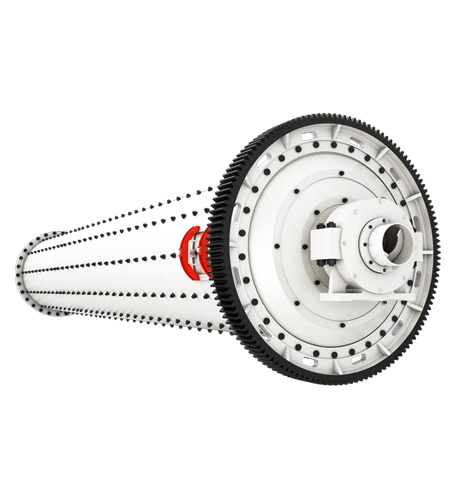
A Ball Mill is a grinding machine that uses a rotating cylinder filled with grinding media, usually steel balls, to reduce material size. As the cylinder rotates, the grinding media lift and fall, producing impact and friction that gradually grind the feed material into finer particles.
Ball mills are widely used in mineral processing, metallurgy, building materials, chemical processing and other industries that require material grinding. Depending on the equipment configuration and process design, a ball mill can be used for wet or dry grinding.
STM’s product information describes ball mills as suitable for a broad range of materials, including metal ores, limestone, dolomite, feldspar, barite, graphite, coal, slag and other compatible mineral or industrial materials. The company also lists replaceable liners, a range of grinding media options and continuous operation among the equipment’s features.
For mining operators and mineral-processing plants, the key to selecting a ball mill is to match the feed material, required capacity and target product fineness with the appropriate model and grinding process.
Key Advantages of STM Ball Mills
1. Wide Range of Applications
STM’s ball mill product information lists applications across mineral processing, metallurgy, chemical industry, building materials and coal-related processing.
Depending on the material and process requirements, ball mills may be considered for grinding gold ore, iron ore, limestone, feldspar, barite, slag and other suitable materials.
Material compatibility should be checked before selecting the equipment, especially when moisture, abrasiveness or product contamination requirements are important.
2. Multiple Model Options
STM’s published ball mill specifications cover multiple cylinder sizes, from smaller models for lower-throughput requirements to larger models for higher-capacity grinding applications.
Choosing a model should involve more than comparing cylinder dimensions. Feed size, material grindability, target fineness, throughput and the complete grinding circuit all influence the appropriate selection.
3. Replaceable Liners and Grinding Media Options
According to STM’s product information, the ball mill uses a replaceable lining arrangement, with different lining and grinding-media options available.
Liner and grinding-media selection should reflect the material being processed, the desired grinding performance and wear conditions. Correct selection and routine inspection help support reliable operation and maintenance planning.
4. Continuous Grinding Operation
Ball mills are commonly used in production processes that require ongoing material grinding. STM identifies continuous operation as one of the advantages of its ball mill equipment.
Actual operating performance depends on the selected model, feeding consistency, grinding-media loading, material properties and maintenance condition.
5. Straightforward Structure and Maintenance
STM’s published product description highlights the ball mill’s relatively simple structure, convenient installation and adjustment, and maintainable lining arrangement.
For industrial buyers, it is important to evaluate access to wear parts, lubrication and drive-system maintenance, installation requirements and the availability of technical support.
Ball Mill Working Principle
A ball mill generally reduces material size through the following stages.
Step 1: Material Feeding
Crushed material enters the rotating cylinder through the feed end. The feed size must be suitable for the selected mill and the intended grinding process.
Step 2: Cylinder Rotation
The drive system rotates the cylinder. As the mill turns, the grinding media move with the cylinder and are lifted before falling or cascading through the material.
Step 3: Impact and Grinding
The grinding media impact and rub against the material, reducing particle size through repeated impact and friction.
Step 4: Material Discharge
Ground material leaves the mill through its discharge arrangement. The exact discharge design depends on the selected equipment and process configuration.
Step 5: Classification or Downstream Processing
In a mineral-processing plant, the ground material may be sent to classification, flotation, magnetic separation, leaching or another downstream process, depending on the ore and recovery route. A grinding circuit may also include additional classification and recirculation equipment when required.
Applications of Ball Mills
Gold Ore Grinding
Ball mills are commonly considered for grinding gold-bearing ore before subsequent mineral-processing operations. The required grinding fineness depends on the ore characteristics and the selected recovery process.
For gold-processing projects, mill selection should account for feed size, throughput, target particle size, ore hardness and the downstream separation method.
Iron Ore and Metal Ore Processing
Ball mills can be used in grinding circuits for iron ore and other compatible metal ores. The appropriate mill size and grinding conditions depend on the ore’s grindability and the required particle-size distribution before further processing.
Limestone and Non-Metallic Mineral Grinding
Suitable limestone, dolomite, feldspar, barite and other non-metallic minerals may be processed using ball mills where the required grinding range and product characteristics match the equipment’s capabilities.
Customers producing mineral powders should confirm whether a ball mill or another grinding technology is more appropriate for their target fineness and production capacity.
Cement and Building Materials
Ball mills are used in various building-material and cement-related grinding processes. The appropriate design depends on whether the application involves raw materials, clinker or another compatible material, as well as the required fineness and plant configuration.
Coal, Slag and Other Industrial Materials
STM’s product information also lists coal, slag and several other industrial materials among its possible applications. Suitability depends on material properties, moisture, process safety requirements and the required output specification.
Wet Ball Mill vs Dry Ball Mill
Ball mills can be configured for wet or dry grinding, depending on the material and the requirements of the process. The correct configuration should be confirmed for the selected STM model.
| Consideration | Wet Grinding | Dry Grinding |
|---|---|---|
| Process medium | Water or another suitable liquid is used in the grinding process | Material is ground without adding a liquid grinding medium |
| Typical process considerations | Slurry handling, water supply and downstream liquid-solid separation | Moisture control, dust collection and dry-material handling |
| Downstream equipment | May require pumps, classifiers and dewatering equipment | May require air classification, dust collection or other dry-handling equipment |
| Selection factors | Slurry properties, water availability and downstream process | Feed moisture, dust control, product requirements and process design |
Neither configuration is universally better. The selection depends on the material, required product characteristics, site conditions and downstream process. STM should confirm the available wet or dry configuration for the chosen model before the page is published as a model-specific claim.
Ball Mill vs Other Grinding Equipment
| Equipment | Typical role | Key selection considerations |
|---|---|---|
| Ball Mill | Grinding crushed materials into finer particles | Grinding capacity, feed size, target fineness, wet/dry process and media consumption |
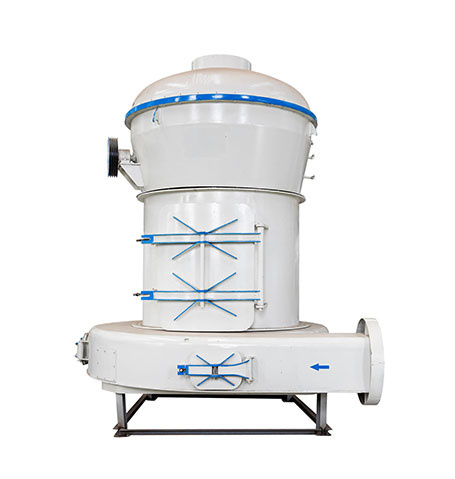
| Raymond Mill | Powder grinding for compatible materials and fineness ranges | Material hardness, feed size and required powder fineness |
| European Grinding Mill | Grinding suitable mineral and industrial materials into powder | Capacity, fineness range, energy requirements and process configuration |
| Three Ring Mill | Fine or ultrafine grinding for suitable materials | Required particle size, material hardness and throughput |
A ball mill is not necessarily the best choice for every powder-production application. When comparing grinding technologies, buyers should assess the target particle-size distribution, throughput, material characteristics, energy consumption and total operating costs.
STM Ball Mill Technical Specifications
The following table reproduces the model data published on STM’s English ball mill product page. These are catalogue-listed values, not a guarantee of performance for every material or operating condition. Confirm the current specification sheet and selected configuration with STM before making a purchase decision.
| Model | Speed (r/min) | Maximum Ball Load (t) | Feed Size (mm) | Output Size (mm) | Power (kW) | Capacity (t/h) | Weight (t) |
|---|---|---|---|---|---|---|---|
| Φ900×1800 | 37 | 1.5 | ≤15 | 0.075–0.89 | 18.5 | 0.65–2 | 4.6 |
| Φ900×2100 | 37 | 2.3 | ≤15 | 0.075–0.4 | 18.5 | 0.4–2 | 3.9 |
| Φ900×3000 | 36 | 3.85 | ≤25 | 0.89 | 30 | 1.1–2.5 | 7.78 |
| Φ1200×2400 | 35 | 4.6 | ≤25 | 0.075–0.4 | 30 | 1.3–3.2 | 8.65 |
| Φ1200×2800 | 35 | 5.4 | ≤25 | 0.075–0.4 | 37 | 1.5–3.7 | 10.02 |
| Φ1200×4500 | 35 | 8.6 | ≤25 | 0.075–0.4 | 45 | 2.7–6.79 | 14 |
| Φ1500×3000 | 29 | 9 | ≤25 | 0.047–0.4 | 75 | 3.3–8.2 | 14.12 |
| Φ1500×3500 | 29 | 10.5 | ≤25 | 0.047–0.4 | 75 | 3.3–8.5 | 15.64 |
| Φ1500×4500 | 29 | 13.5 | ≤25 | 0.047–0.4 | 90 | 4.5–12 | 20 |
| Φ1500×5700 | 29 | 17 | ≤25 | 0.047–0.4 | 110 | 2.6–14 | 21.5 |
| Φ1830×3000 | 24 | 13.5 | ≤25 | 0.047–0.4 | 135 | 4–15 | 28 |
| Φ1830×3600 | 24 | 14 | ≤25 | 0.047–0.4 | 135 | 4–15 | 29 |
| Φ1830×4500 | 24 | 20 | ≤25 | 0.047–0.4 | 155 | 4–19 | 32 |
| Φ1830×7000 | 24 | 31.5 | ≤25 | 0.047–0.4 | 210 | 6–22 | 37.5 |
| Φ2100×3000 | 22 | 18 | ≤25 | 0.047–0.4 | 180 | 6.4–28 | 40.79 |
| Φ2100×3600 | 22 | 20 | ≤25 | 0.047–0.4 | 210 | 7–28 | 42 |
| Φ2100×4000 | 22 | 21.5 | ≤25 | 0.047–0.4 | 210 | 7.6–28 | 43.45 |
| Φ2200×3600 | 21.7 | 25 | ≤25 | 0.047–0.4 | 245 | 5.2–32 | 44 |
| Φ2200×7000 | 21.7 | 46 | ≤25 | 0.047–0.4 | 380 | 15–38 | 63 |
| Φ2400×3600 | 21 | 28 | ≤25 | 0.047–0.4 | 320 | 8–60 | 47 |
| Φ2400×4500 | 21 | 35 | ≤25 | 0.047–0.4 | 380 | 8.5–60 | 70.5 |
| Φ2700×3600 | 20.7 | 40 | ≤25 | 0.047–0.4 | 400 | 12–80 | 75.5 |
| Φ2700×4500 | 20.7 | 48 | ≤25 | 0.047–0.4 | 450 | 12–90 | 102 |
| Φ3200×4000 | 18 | 65 | ≤25 | 0.047–0.4 | 800 | 30–180 | 137 |
Specification note: The capacity ranges shown above are reproduced from STM’s published product page. Because mill throughput varies with material grindability, feed size, target fineness and operating conditions—and some catalogue ranges may require technical clarification—ask STM to confirm the expected capacity for your specific material and process before finalizing the equipment selection.
How to Choose the Right Ball Mill
Before requesting a quotation, prepare the following information:
- Material type: Gold ore, iron ore, limestone, feldspar, barite or another material.
- Material characteristics: Hardness, grindability, moisture and abrasiveness.
- Feed size: The particle size entering the mill after crushing.
- Required capacity: Target throughput in tons per hour.
- Target fineness: Required output size or particle-size distribution.
- Grinding method: Wet or dry grinding, according to the process requirements.
- Downstream process: Classification, flotation, magnetic separation, leaching or another operation.
- Site conditions: Available installation space, power supply and material-handling requirements.
- Operating requirements: Expected working hours, maintenance access and spare-parts planning.
The most suitable ball mill is determined by the complete grinding process rather than by cylinder size alone. Providing these details helps STM evaluate the appropriate model and supporting equipment.
Why Choose Henan Centbro Machinery (STM)?
Henan Centbro Machinery (STM) Equipment Co., Ltd. is based in Zhengzhou, Henan, China. According to the company brochure, STM integrates research and development, production and sales, with a production base covering approximately 8,000 square meters.
The brochure describes STM’s product range as including crushers, ball mills, dryers and supporting mining equipment. It also reports ISO 9001:2008 quality management system certification, EU CE certification and exports to Russia, Kazakhstan, the Philippines, the Middle East, South America, Africa and other markets.
STM’s company information describes an experienced after-sales team that can provide installation and commissioning support. The exact service scope, availability and terms should be confirmed for each project.
For customers planning a mineral-processing plant, the goal is to select grinding equipment that matches the material, production target and downstream process—not simply choose the largest available model.
Complete Grinding and Mineral Processing Solutions
A ball mill is often one part of a wider material-processing system. Depending on the application, a typical process may include:
Raw Material → Crushing Equipment → Ball Mill → Classification or Screening → Downstream Processing
For ore-processing projects, additional equipment may be required for slurry handling, separation, dewatering or material transfer. For dry-grinding projects, the system may need suitable feeding, classification and dust collection arrangements.
The final process flow should be designed according to the material characteristics, required product fineness, target capacity and site conditions. STM can assess the required equipment configuration based on the project information supplied.
Request a Ball Mill Quote
Looking for a ball mill for mining, ore grinding or industrial mineral processing?
Contact STM with your material and production requirements to receive a model recommendation and a project-specific quotation.
Please include:
- Material type、Feed size、Required capacity (t/h)、Target output fineness、Wet or dry grinding requirement、Downstream processing method、Project location、Existing equipment, if any
Frequently Asked Questions
What materials can a ball mill grind?
STM’s product information lists metal ores, limestone, dolomite, feldspar, barite, graphite, coal, slag and other compatible materials. The correct mill and process configuration depend on the material properties and target product.
What is the difference between a ball mill and a grinding mill?
“Grinding mill” is a broad category that includes different equipment designs. A ball mill uses a rotating cylinder and grinding media. Other mills may use rollers or different grinding mechanisms. The best choice depends on material hardness, feed size, desired fineness and throughput.
Can a ball mill be used for gold ore grinding?
Ball mills are commonly used in gold-ore grinding circuits. The required capacity and fineness depend on the ore characteristics and the downstream recovery process. The complete circuit should be evaluated before selecting a model.
Is a ball mill suitable for wet and dry grinding?
Ball mills can be designed for wet or dry grinding, but the available configuration must be confirmed for the selected model. Water availability, feed moisture, dust control and downstream processing are important selection factors.
How do I select the right ball mill capacity?
Start with the required hourly throughput, feed size, material grindability and target fineness. Ask the supplier to confirm expected capacity for the actual material and operating conditions rather than relying only on a general catalogue range.
How much does a ball mill cost?
The price depends on the model, capacity, motor power, grinding configuration, lining and media requirements, supporting equipment and installation scope. Send STM your project requirements for a relevant quotation.
Can STM provide a complete grinding solution?
STM supplies ball mills and other mining and grinding equipment. The exact equipment package and process configuration should be confirmed according to the project requirements and the company’s available products.