High-Pressure Grinding Mill for Sale | YGM Series | STM
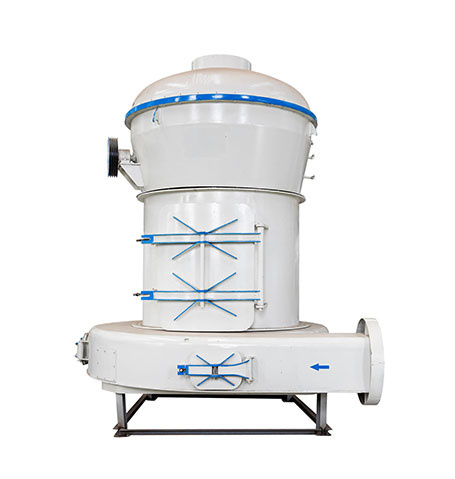
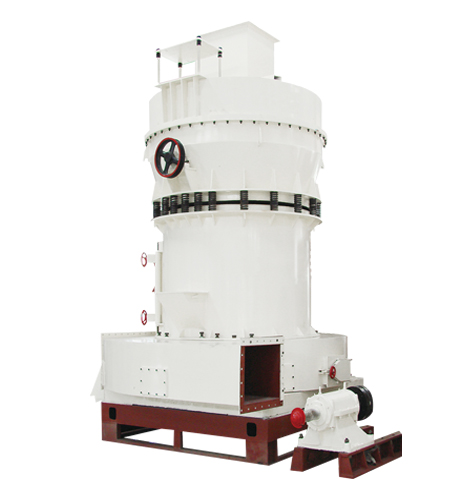
The STM High-Pressure Grinding Mill, also known as a High Pressure Pulverizer, is designed for fine grinding and powder production from suitable mineral materials. The YGM series is suitable for processing materials with a Mohs hardness of no more than 9.3 and moisture content below 8%, according to the STM product catalogue and product listing.
With five models — YGM75, YGM95, YGM130, YGM160, and YGM190 — the series provides different feed-size and capacity options for mineral powder processing. The catalogue identifies applications in mining, metallurgy, chemicals, and building materials, including the grinding of barite, limestone, ceramics, slag, and other suitable non-flammable, non-explosive materials.
High-Pressure Grinding Mill for Sale | High Pressure Pulverizer | YGM Grinding Mill | YGM Series Grinding Mill | Mineral Powder Grinding MillIndustrial Grinding Mill | Grinding Mill Manufacturer | Mineral Grinding Equipment
1. What Is a High-Pressure Grinding Mill?
A high-pressure grinding mill is a type of grinding equipment that uses rollers and a grinding ring to reduce suitable materials into powder. In the STM YGM series, the catalogue describes a high-pressure spring mechanism that increases the pressure applied by the grinding rollers.
During operation, material enters the grinding chamber and is ground between the rollers and grinding ring. A classifier separates particles according to the required fineness, while the configured collection system collects the finished powder.
Unlike a rod mill or ball mill, which uses steel rods or steel balls inside a rotating drum, the YGM high-pressure grinding mill is designed for mineral powder production.
The equipment is worth evaluating when your production objective is to obtain a specified powder fineness from compatible raw materials rather than simply reduce large ore particles.
2. Key Features of the STM High-Pressure Grinding Mill
High-Pressure Roller Grinding
According to the STM catalogue, the high-pressure spring mechanism increases the grinding pressure applied by the rollers by approximately 800–1,200 kg. The catalogue also states that production can increase by 10–20% compared with other mills under the same power conditions.
These figures are manufacturer catalogue claims, not guaranteed results for every material or operating condition. Actual production depends on material hardness, feed size, target fineness, equipment configuration, and operating settings.
Adjustable Finished Powder Fineness
The STM catalogue describes a broad finished-product size range, with the general product description listing approximately 80–425 mesh, while noting that some materials can reach 600 mesh.
The main technical-parameter table separately lists an output-size range of 0.613–0.033 mm. Because these descriptions are not fully consistent, the actual achievable fineness should be confirmed with STM for the selected model and material.
This makes target fineness an important factor when choosing a YGM grinding mill for industrial powder production.
Suitable for a Wide Range of Mineral Materials
The STM catalogue states that the high-pressure grinder can process more than 280 kinds of suitable materials with a Mohs hardness of no more than 9.3 and moisture below 8%.
Examples specifically mentioned in the catalogue include:
- Barite
- Limestone
- Ceramics
- Slag
The catalogue also identifies applications across mining, metallurgy, chemical processing, and building materials. Material compatibility should be confirmed before ordering, especially for abrasive materials or applications with strict powder-quality requirements.
Adjustable Classifier
The catalogue identifies convenient classifier adjustment as one of the machine’s features. Classification helps control the particle-size distribution of the finished powder.
The required mesh size should be specified when requesting a quotation so that the proposed machine configuration can be evaluated against your production target.
Multi-Stage Sealing and Dust Collection
The STM catalogue describes an overlapping, multi-stage sealing arrangement for the grinding assembly. It also states that the dust-removal performance can meet national dust-emission standards.
Actual dust emissions depend on the complete system, including the dust collector, installation, maintenance, and operating conditions. Confirm the applicable environmental requirements for your destination market before purchasing.
3. STM YGM Series High-Pressure Grinding Mill Specifications
The following specifications are taken from the main technical-parameter table in the STM product catalogue.
| Parameter | YGM75 | YGM95 | YGM130 | YGM160 | YGM190 |
|---|---|---|---|---|---|
| Number of grinding rollers | 3 | 4 | 5 | 6 | 6 |
| Roller size (mm) | 260 × 150 | 310 × 190 | 410 × 230 | 450 × 300 | 500 × 330 |
| Grinding ring size (mm) | 780 × 150 | 950 × 190 | 1280 × 230 | 1600 × 300 | 1900 × 320 |
| Maximum feed size (mm) | ≤15 | ≤25 | ≤30 | ≤35 | ≤40 |
| Listed output size (mm) | 0.613–0.033 | 0.613–0.033 | 0.613–0.033 | 0.613–0.033 | 0.613–0.033 |
| Listed capacity (t/h) | 1–3 | 2.1–5.6 | 2.5–9.5 | 5–16 | 9–27 |
| Listed main-machine power (kW) | 18.5 | 45 | 90 | 132 | 250 |
| Overall dimensions (L × W × H, mm) | 4300 × 3500 × 5100 | 7100 × 5900 × 7900 | 7900 × 8000 × 9700 | 12550 × 5700 × 8355 | 11200 × 8530 × 9685 |
Important specification notes
- The product interface states that suitable material hardness is below 9.3 and moisture content is below 8%. Confirm the hardness scale and testing method with STM.
- The catalogue’s general product description lists a finished-product range of 80–425 mesh, with some materials reaching 600 mesh. The main technical table lists 0.613–0.033 mm. Confirm the applicable fineness range for the model and material.
- The catalogue’s separate production-line configuration table lists different capacity figures: YGM75 at 0.8–1.5 t/h, YGM95 at 2.5–4 t/h, YGM130 at 4.5–7 t/h, YGM160 at 7–11 t/h, and YGM190 at 11–15 t/h.
- The main technical table lists YGM190 main-machine power as 250 kW, while the production-line configuration table lists 185 kW. STM should confirm the correct figure for the configuration being quoted.
For accurate purchasing decisions, use the main technical table as a reference and ask STM to issue a confirmed model-specific specification sheet before publishing final commercial terms.
Grinding Line Configuration
The STM catalogue’s schematic of supporting equipment identifies the following components for a typical grinding line:
- Jaw crusher
- Vibrating feeder
- Bucket elevator
- Gearbox or transmission system
- Main grinding machine
- Classifier
- Blower
- Discharger
- Hopper
- Powder collector
- Piping and air-regulating components
- Dust collector
The exact combination depends on the selected model, raw material, production capacity, and project layout. The catalogue also indicates that the hopper arrangement can be adapted to actual site conditions.
4. High-Pressure Grinding Mill Applications by Industry
Mining and Metallurgy
Mining and metallurgical businesses may require mineral grinding to prepare materials for further processing or industrial use. The YGM series may be considered for compatible mineral powder applications where the feed size, hardness, moisture, and target fineness meet the equipment requirements.
For ore beneficiation projects, first determine whether the process requires mineral powder production, coarse ore grinding, or finer grinding for mineral liberation.
Building Materials Industry
Limestone, slag, and other suitable mineral materials are used in different building-material applications. A high-pressure grinding mill may be evaluated when these materials need to be processed into powder within the required particle-size range.
The finished product requirements will vary depending on its intended use, so confirm the target fineness and required production rate before selecting a model.
Chemical Industry
Industrial minerals may be processed into powder for use as raw materials in chemical manufacturing. The STM catalogue identifies chemical processing as one of the industries served by its high-pressure grinding equipment.
Material compatibility, finished-product specifications, and any purity requirements should be reviewed before selecting the grinding system.
Ceramics and Other Industrial Materials
The STM catalogue specifically mentions ceramics among the materials suitable for processing. Whether a particular ceramic raw material can be ground by the machine depends on its hardness, abrasiveness, moisture content, and required particle size.
The same selection process should be followed for other industrial materials not explicitly listed in the catalogue.
Barite and Limestone Powder Production
Barite and limestone are two materials specifically identified in the STM catalogue. When planning a barite or limestone grinding line, buyers should consider:
- Raw material feed size
- Material hardness and moisture
- Required powder fineness
- Target production capacity
- Classifier and dust-collection requirements
- Available installation space and power supply
These details are more useful for equipment selection than choosing a model based on price alone.
5. High-Pressure Grinding Mill vs Rod Mill vs Ball Mill
When comparing grinding equipment, buyers should distinguish between mineral powder grinding and ore grinding for mineral processing. A high-pressure grinding mill, rod mill, and ball mill have different grinding mechanisms and typical process roles.
| Comparison | High-Pressure Grinding Mill | Rod Mill | Ball Mill |
|---|---|---|---|
| Grinding mechanism | Rollers and grinding ring with a high-pressure spring mechanism in the STM YGM design | Long steel rods inside a rotating drum | Steel balls inside a rotating drum |
| Typical grinding objective | Powder production from suitable mineral materials | Coarse grinding and controlled size reduction | Fine grinding and further size reduction |
| Common process role | Mineral powder processing | Preliminary grinding or selected ore-grinding circuits | Fine grinding, regrinding, or preparation for downstream beneficiation |
| Product-size considerations | Selected fineness controlled through the grinding and classification system | Often chosen when a controlled coarser product and fewer excessive fines are desirable | Often chosen when finer grinding is required |
| Typical selection factors | Material hardness, moisture, feed size, target fineness, capacity | Ore characteristics, feed size, target product size, process flow | Ore characteristics, target fineness, mineral liberation, process flow |
| Best suited to | Compatible industrial mineral powder applications | Selected coarse-grinding applications | Applications requiring the grinding characteristics of a ball mill |
High-Pressure Grinding Mill vs Rod Mill
A rod mill uses long steel rods as grinding media. It is commonly considered for coarse grinding, including selected ore-processing circuits where the ground material will proceed to further processing.
The STM YGM high-pressure grinding mill uses rollers and a grinding ring and is intended for suitable mineral powder production.
Consider a high-pressure grinding mill when your main objective is to produce mineral powder within a specified fineness range and your raw material meets the machine’s limits.
Consider a rod mill when your process requires controlled coarse grinding of ore and the grinding characteristics are appropriate for the downstream process.
High-Pressure Grinding Mill vs Ball Mill
A ball mill uses steel balls to grind material through impact and abrasion. Ball mills are widely used in mineral processing and other applications that require fine grinding.
The YGM high-pressure grinding mill has a different grinding mechanism and is described in the STM catalogue for processing suitable mineral materials into powder.
Consider a high-pressure grinding mill for compatible mineral powder production.
Consider a ball mill when the process design calls for ball-mill grinding, such as further size reduction or a grinding stage designed around the required mineral liberation.
The choice should be based on the material, required fineness, capacity, and complete production process. No single type of mill is best for every application.
6. How to Choose the Right YGM Grinding Mill
Before requesting a quotation, prepare the following information:
- Raw material: Barite, limestone, slag, ceramics, or another material.
- Maximum feed size: Compare it with the feed-size limit of the proposed YGM model.
- Hardness: Provide the hardness value and measurement scale.
- Moisture content: The product listing specifies below 8%.
- Target fineness: State the required mesh size or particle-size range.
- Required capacity: Provide the expected production rate in tonnes per hour.
- Industry and application: Explain the intended use of the finished powder.
- Site conditions: Include available floor space, power supply, dust-control requirements, and existing equipment.
For example, the catalogue lists a maximum feed size of ≤15 mm for YGM75 and ≤40 mm for YGM190. However, maximum feed size alone is not enough to select a model. Required capacity, target fineness, and actual material characteristics must also be considered.
7. Why Choose Henan Centbro Machinery (STM) Equipment Co., Ltd.?
Henan Centbro Machinery (STM) Equipment Co., Ltd. is based in Zhengzhou, Henan, China. According to the company brochure, STM integrates research and development, manufacturing, and sales, with an approximately 8,000 m² production base.
The company’s equipment range includes crushers, ball mills, dryers, and supporting mining machinery. The brochure reports ISO 9001:2008 quality management system certification and EU CE certification. STM also serves overseas markets and provides technical support for equipment planning and project implementation, with installation and commissioning arrangements subject to the project agreement.
For a mineral powder production project, the right equipment choice should consider not only the grinding mill itself but also feeding, crushing, classification, powder collection, dust control, and compatibility with the wider production line.
8. High-Pressure Grinding Mill Price and Quotation
The product interface displays a price of US$16,000 for the High-Pressure Grinding Mill.
This is the displayed listing price, not a confirmed quotation for every YGM model or a complete grinding line. The final price may depend on the selected model, motor and auxiliary equipment, configuration, shipping, and other project requirements.
To help STM prepare a suitable quotation, please provide:
Material name and hardness | Feed size and moisture content | Target powder fineness | Required capacity | Preferred YGM model, if known | Project location and required supporting equipment
Contact STM to Confirm the Suitable YGM Model and Request a Quote.
Frequently Asked Questions
1. What materials can the STM High-Pressure Grinding Mill process?
The STM catalogue identifies barite, limestone, ceramics, and slag among suitable materials. It states that the machine can process more than 280 kinds of suitable materials with a Mohs hardness of no more than 9.3 and moisture below 8%. Confirm the suitability of your specific material before ordering.
2. What is the maximum feed size of the YGM series?
The catalogue lists maximum feed sizes of ≤15 mm for YGM75, ≤25 mm for YGM95, ≤30 mm for YGM130, ≤35 mm for YGM160, and ≤40 mm for YGM190.
3. What finished powder fineness can the YGM mill achieve?
The catalogue’s general description lists approximately 80–425 mesh and states that some materials can reach 600 mesh. Its main technical table lists 0.613–0.033 mm. Since these ranges are not fully consistent, confirm the applicable finished-product size with STM for the selected material and model.
4. What is the production capacity of the YGM series?
The main technical table lists capacities from 1–3 t/h for YGM75 to 9–27 t/h for YGM190, with intermediate models listed in the specifications table above. The separate production-line configuration table gives different figures. Ask STM to confirm the capacity applicable to your proposed configuration.
5. What is the difference between a high-pressure grinding mill, rod mill, and ball mill?
A high-pressure grinding mill uses rollers and a grinding ring in the YGM design and is intended for suitable mineral powder production. A rod mill uses steel rods and is commonly used for coarse grinding. A ball mill uses steel balls and is widely used for finer grinding. Selection depends on the material and target process.
6. What is the price of the STM High-Pressure Grinding Mill?
The product interface displays US$16,000. Confirm the model, included components, motor and auxiliary configuration, and shipping terms with STM before treating this amount as a final quotation.
7. How do I select the right YGM model?
Provide the raw material, feed size, hardness, moisture, target fineness, and required capacity. STM can then confirm the suitable model and clarify the technical parameters and equipment configuration.