Application Scenarios for Roller Crushers
Sticky / Wet Feed MaterialsBest Choice — Far less prone to clogging than cone or jaw crushers.
Strict Dust & Fines ControlBest Choice — Produces consistent product sizing with minimal fines.
Medium-Hard to Soft RocksIdeal Choice — Perfect for coal, clay, shale, limestone, and soft ores.
Limited Maintenance BudgetIdeal Choice — Low spare part costs and simple routine maintenance.
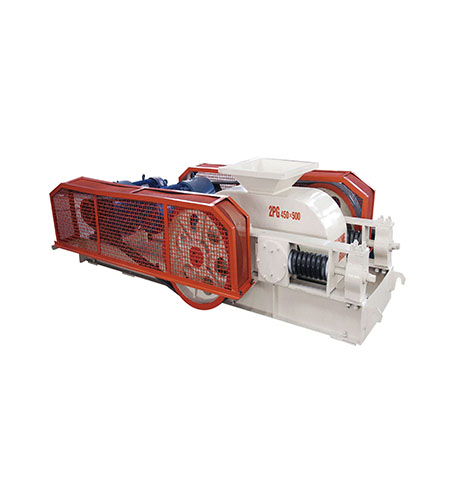
When selecting crushing equipment for aggregates, coal, or industrial minerals, cone crushers and impact crushers often take the spotlight. However, Double Roll Crushers (including smooth roll crushers and toothed roll crushers) remain among the most reliable and highly favored machines on the market.
Why do plant operators and mining managers consistently prefer roll crushers? Here are the top four reasons behind their enduring popularity:
1. Exceptional Capability with Wet and Sticky Materials
In aggregate production and mining operations, material clogging is one of the most frustrating challenges. Traditional crushing equipment often underperforms when handling wet or sticky clay and ores, frequently leading to downtime. Roll crushers, however, have inherent advantages in overcoming these issues:
- Non-Clogging Design: Roll crushers utilize opposing counter-rotating rollers to draw material downward for continuous crushing.
- Integrated Scraping Systems: Many modern roll crushers are equipped with scrapers that clean the roller surfaces in real time, preventing material buildup even in adverse weather conditions.
2. Precise Size Control and Minimal Over-Crushing (Low Fines)
If your primary goal is to produce a specific target particle size while minimizing dust and ultra-fine particles, roll crushers are undoubtedly the ideal choice:
- Shearing & Compression Mechanism: Unlike high-speed impact crushers that shatter rock into fine dust, roll crushers reduce material through compression and shearing forces.
- Uniform Gradation: By adjusting the gap between the rollers, this controlled crushing process produces highly uniform final products with minimal fines, maximizing usable output yield (ideal for processing coal, salt, limestone, and metallic ores).
3. Simple Structure and Extremely Low Maintenance Costs
Equipment simplicity directly translates to higher operational uptime and lower operating expenses:
- Fewer Moving Parts: Compared to multi-cylinder cone crushers or complex impact crushing chambers, roll crushers feature a much cleaner mechanical design.
- Easy Wear Part Replacement: Replacing worn roller shells or teeth segments is fast and straightforward, significantly reducing maintenance workload and downtime.
4. Low Power Consumption and High Energy Efficiency
Operating cost is a key factor dictating long-term plant profitability:
- Direct Force Application: Energy is applied directly to the material passing between the rollers, keeping power loss to a minimum.
- Cost-Effective Operation: When processing equivalent tonnages, double roll crushers typically consume substantially less energy per ton compared to other secondary or tertiary crushers.
💡 Quick Summary: When Should You Choose a Roll Crusher?
| Application Scenario | Is a Roll Crusher the Right Choice? |
| Sticky / Wet Feed Materials | Best Choice — Far less prone to clogging than cone or jaw crushers. |
| Strict Dust & Fines Control | Best Choice — Produces consistent product sizing with minimal fines. |
| Medium-Hard to Soft Rocks | Ideal Choice — Perfect for coal, clay, shale, limestone, and soft ores. |
| Limited Maintenance Budget | Ideal Choice — Low spare part costs and simple routine maintenance. |
Core Advantage: The enduring popularity of roll crushers stems from their structural simplicity, high reliability when processing sticky materials, outstanding energy efficiency, and precise output size control.
Trying to decide between a smooth roll crusher, a toothed roll crusher, or a hydraulic cone crusher for your material?
Contact our technical engineers today for a customized crushing test and layout consultation!