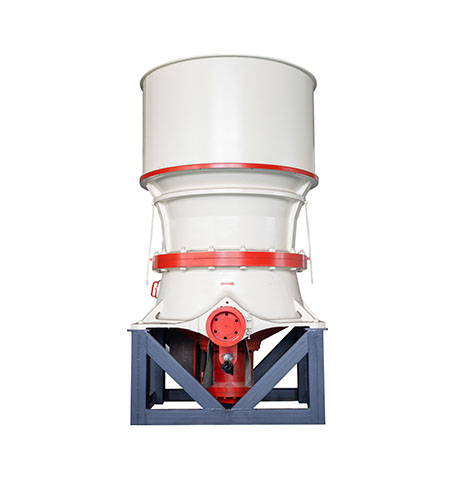
Single-Cylinder Hydraulic Cone Crusher
Material:Ideal for medium-to-hard, abrasive rocks (Granite, Basalt, Gravel).
Stage,Perfect as a Secondary or Tertiary crusher.
Operation:Best for plants seeking high automation, simple maintenance, and minimal downtime.
ROI:Higher upfront value with lower long-term spare part and wear costs.
When planning to build or upgrade an aggregate production line or mining operation, selecting the appropriate crushing equipment is one of the most critical decisions. An improper choice can lead to production bottlenecks, excessive wear, and a sharp increase in operating costs. To identify the equipment that best aligns with your current production needs, you should conduct an initial assessment of four core factors: material characteristics, production requirements, site conditions, and budget.
The following guide is designed to help you determine whether a single-cylinder hydraulic cone crusher is the ideal choice for your production line and to assist you in selecting the most suitable model.
- Define the characteristics of the material to be crushed: The raw material determines the level of durability required and the configuration of the crushing chamber. Hardness and abrasiveness: Single-cylinder hydraulic cone crushers are specifically designed for medium-hard to hard rock (such as granite, basalt, river pebbles, and iron ore). If the material is highly abrasive, ensure that the crusher is equipped with high-manganese steel liners (e.g., Mn18Cr2 alloy). Maximum feed size: Verify that the crusher’s feed opening size is compatible with the discharge size from the preceding (primary) crusher. Never force oversized rocks into a single-cylinder crusher, as this can cause material bridging (clogging) and place unnecessary stress on the main shaft.
Our current range of single-cylinder hydraulic cone crushers accommodates feed sizes from 560 mm down to 50 mm. Specific feed size ranges vary by model; please contact us directly or refer to the individual product information pages for details. - Define production requirements (capacity and product shape): What is your target output, and what are your quality standards for the aggregate?
Throughput capacity (tons per hour, TPH): Single-cylinder hydraulic cone crushers offer high capacity for secondary and tertiary crushing operations. It is advisable to select a model with a capacity curve that comfortably exceeds your required hourly throughput, ensuring a buffer for peak production periods. Selecting the Right Crushing Chamber: Coarse/Medium chambers are suitable for secondary crushing; they can handle larger feed sizes and maximize throughput. Fine/Extra-fine chambers are designed for tertiary crushing, producing aggregates with precise gradation. Product Shape: Thanks to high crushing force and the effect of inter-particle (lamellar) crushing, single-cylinder hydraulic cone crushers produce high-quality, cubical aggregates with a low content of flat or elongated particles—ideal for high-grade concrete and asphalt production. - Consider Your Site Conditions: The physical environment and location of your plant influence equipment selection, footprint, and weight requirements. Compared to multi-cylinder or spring-type cone crushers, single-cylinder hydraulic models feature a compact design, making them perfect for sites with limited space or for use in mobile/modular production lines. Automation and Ease of Maintenance: If your site experiences power fluctuations or requires remote operation, opt for a model equipped with an integrated PLC control system. Features like automatic Closed-Side Setting (CSS) adjustment and tramp-iron protection allow operators to adjust parameters and clear blockages remotely, eliminating the need for hazardous manual intervention.
- Consider Budget and Total Cost of Ownership (TCO): Initial purchase price is only one factor; consider the full lifecycle operating costs. Lower Maintenance Costs: Single-cylinder crushers have up to 30% fewer moving parts than multi-cylinder models, significantly reducing the rate of mechanical failure and routine maintenance expenses. Minimized Downtime: The automatic tramp-iron protection system—where hydraulic cylinders retract and reset instantly if uncrushable material enters the chamber—protects your equipment investment and keeps downtime to a minimum.
💡 Quick Decision Checklist: Key Factors | Is a Single-Cylinder Crusher Right for You?
Material: Suitable for medium-hard and highly abrasive rocks (e.g., granite, basalt, gravel). Crushing Stage: Ideal for secondary or tertiary crushing applications.
Operational Needs: Well-suited for production lines that prioritize high levels of automation, ease of maintenance, and minimal downtime. Return on Investment (ROI): High initial value, combined with low long-term costs for spare and wear parts. Key Advantages: If you require high production capacity, intelligent hydraulic operation, ease of maintenance, and excellent cubical product shape, a single-cylinder hydraulic cone crusher is your ideal choice.
Not sure which crushing chamber configuration or power rating best aligns with your target capacity? Contact our application engineers today for a free capacity analysis and a customized plant layout solution!